Home History ON THIS DAY August 14, 1945: Japan surrenders in WWII

August 14, 1945: Japan surrenders in WWII

TOKYO, JAPAN.  — Japan, a major antagonist in WWII, had suffered catastrophic losses following the atomic bombing of Hiroshima and Nagasaki on August 6 and 9, respectively, and conventional attacks upon other major cities, such as the firebombing of Tokyo. The Soviet invasion of Manchuria debilitated the only significant forces the Japanese still had left.

0
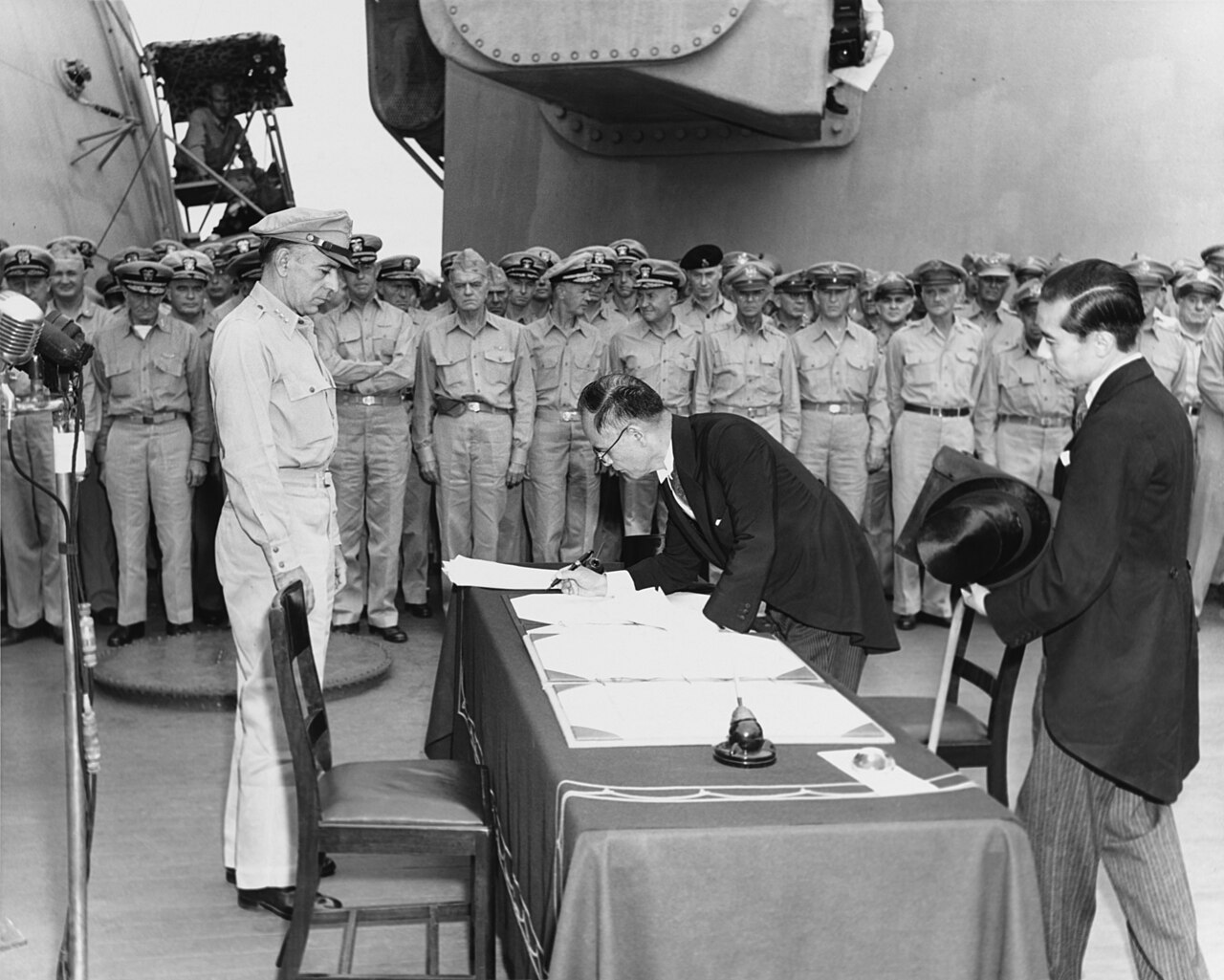
Japanese Foreign Minister Mamoru Shigemitsu signs the Instrument of Surrender on behalf of the Japanese Government, on board USS Missouri (BB-63), 2 September 1945. Lieutentant General Richard K. Sutherland, U.S. Army, watches from the opposite side of the table. Foreign Ministry representative Toshikazu Kase is assisting Mr. Shigemitsu. Photograph from the Army Signal Corps Collection in the U.S. National Archives.

TOKYO, JAPAN.  — Japan, a major antagonist in WWII, had suffered catastrophic losses following the atomic bombing of Hiroshima and Nagasaki on August 6 and 9, respectively, and conventional attacks upon other major cities, such as the firebombing of Tokyo. The Soviet invasion of Manchuria debilitated the only significant forces the Japanese still had left.

The USA had captured the islands of Iwo Jima and Okinawa, bringing the Japanese homeland within range of naval and air attack. Hundreds of thousands of people had been killed, and millions more were casualties or refugees of war.

Japan surrendered to the Allies on August 14, 1945, when Emperor Hirohito accepted the terms of the Potsdam Declaration, also known as the Proclamation Defining Terms for Japanese Surrender.

The official surrender papers were signed on September 2, 1945, aboard the USS Missouri in Tokyo Bay.
NO COMMENTS

Comment on this articleCancel reply

Discover more from VicNews

Subscribe now to keep reading and get access to the full archive.

Continue reading

Exit mobile version