BALLARAT, VIC. — Gold was discovered in Australia as early as the 1830s, but discoveries were kept secret for several reasons. To begin with, there were concerns that the discovery of this valuable resource would spark unrest among the convicts.
Landowners (pastoralists) did not want their properties being destroyed.
The discoveries were usually made by farmers who did not wish to subject their sheep and cattle runs to a sudden influx of prospectors and lawlessness that would inevitably follow.
However, as more people left the Australian colonies to join the gold rush in California, it became apparent that the outward tide of manpower would need to be stemmed. The government began to seek experts who could locate gold in the Australian countryside.
Gold was first officially discovered in Australia in 1851, not far from Bathurst, New South Wales.
Edward Hargraves had carefully studied the geology of the area and, convinced that it was similar to that of the California goldfields, from where he had just returned, went prospecting. He enlisted the assistance of John Lister, a man with local knowledge of the region.
Lister worked with his friends William and James Tom, utilising equipment such as the cradle, or rocker, the design for which Hargraves had brought to New South Wales, and located payable gold at Summerhill Creek. Hargraves named the site “Ophir”, after the Biblical land of gold.
Less than three months later, on August 9, 1851, Victoria had its first gold strike at Sovereign Hill near Ballarat, in the same month it gained its independence from the NSW colony.
While the Ballarat goldfields were rich and promising, the real gold rush began when gold was discovered at Mt Alexander, 60km northeast of Ballarat, and close to the town of Bendigo.
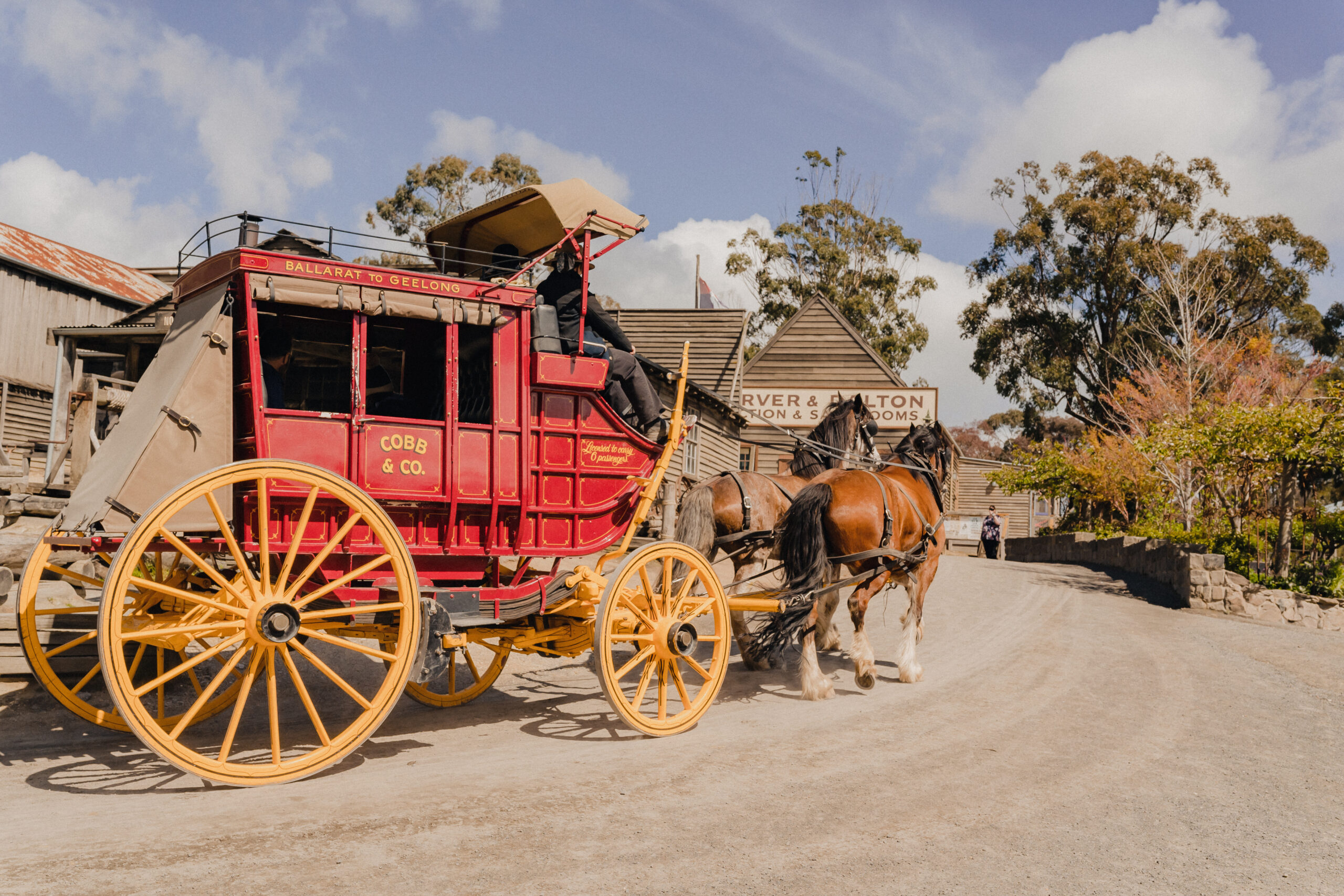
Today, Sovereign Hill offers a re-creation of life on the goldfields in a gold-mining town.