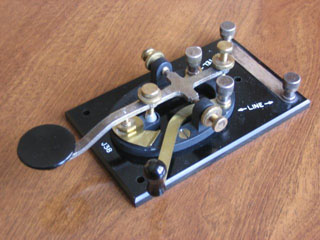
ENGLAND, UK. — Guglielmo Marconi was born in Bologna, Italy, on April 25, 1874. Marconi is best known for the development of a wireless telegraphy system, which came to be known as “radio”. Marconi demonstrated the transmission and reception of Morse Code-based radio signals over a distance of 2 or more kilometres (and up to 6 kilometres) on Salisbury Plain in England in 1896.
Marconi made the first wireless transmission across a body of water on May 13, 1897 from Lavernock Point, South Wales to Flat Holm Island. He also received the first trans-Atlantic radio signal on December 12, 1901, at Signal Hill in St John’s, Newfoundland (now in Canada) using a 400-foot kite-supported antenna for reception.
This was significant in that, prior to this transmission, it was believed that a radio signal could only be transmitted in the line of sight.
Marconi was awarded a British patent for radio communication, specifically “Improvements in transmitting electrical impulses and signals and in apparatus there-for” on July 2, 1897, and this was followed by the US patent on July 13, 1897.
Marconi was awarded the 1909 Nobel Prize in physics.
Marconi passed away on July 20 1937 as radio stations throughout the world observed two minutes of radio silence in tribute.