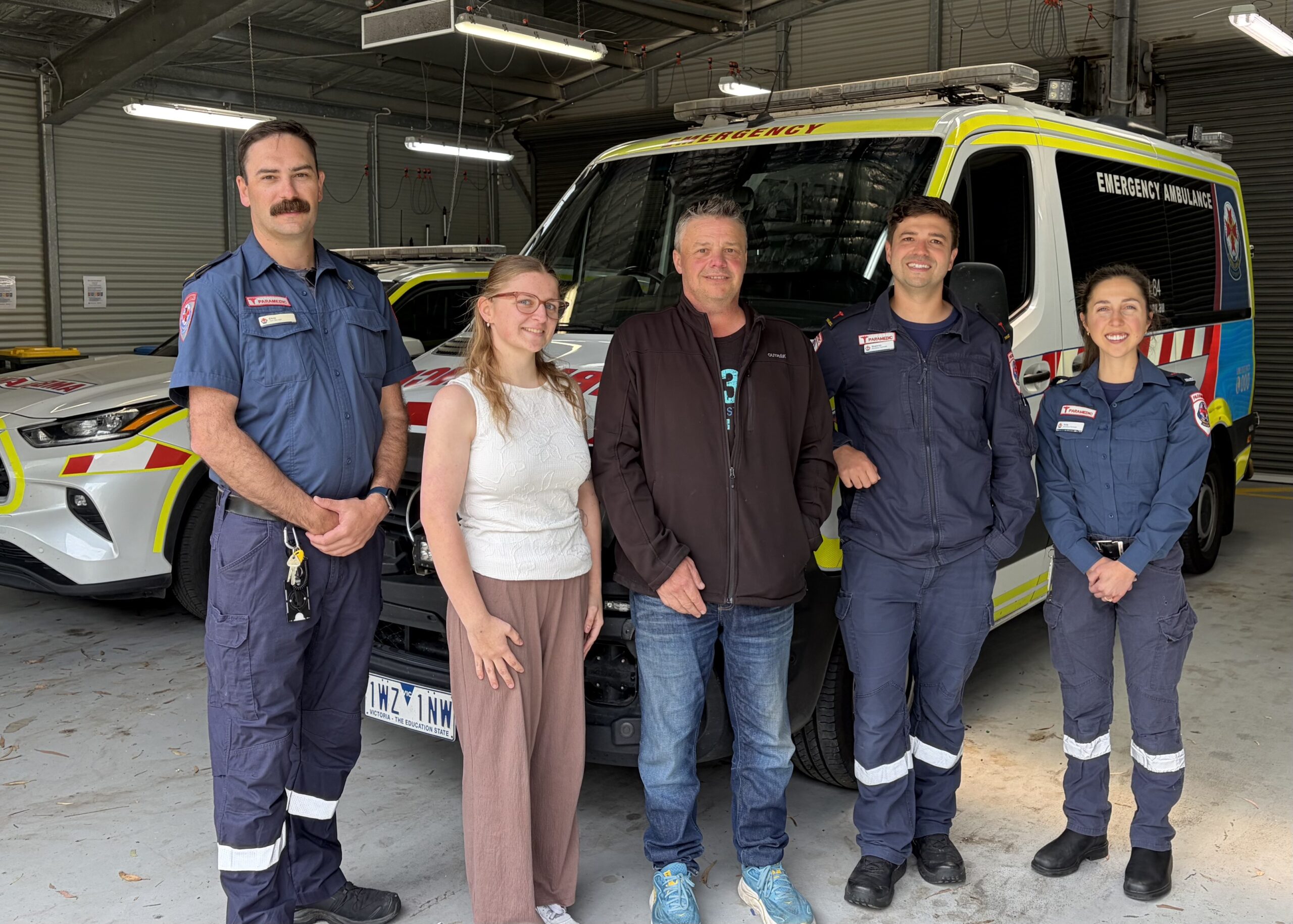
ST LEONARDS, VIC. — When St Leonards man Steven Bowen’s heart stopped in cardiac arrest this year, help was just 200 metres away thanks to an incredible app connecting cardiac arrest patients with community members who can start CPR while paramedics are on their way.
As part of the annual Shocktober campaign, Ambulance Victoria paramedics are calling for more Barwon South West residents to sign up to the GoodSAM app so they too can help save the lives of people in cardiac arrest.
GoodSAM is a free smartphone app that allows Triple Zero call takers to connect members of the public who can perform hands-only CPR with nearby patients in cardiac arrest, so they can start the chain of survival in the critical minutes before paramedics arrive.
It is helping save lives across Victoria, including that of 52-year-old Steven, who went into cardiac arrest at his home in May this year.
Nursing student Mackenzie Sinclair was just 200 metres from Steven’s house when she received an alert through the GoodSAM app.
“I had just got home from a nursing placement, so I quickly put my shoes on and went to help, still wearing my scrubs,” Mackenzie said.
“Steven was very, very unwell when I arrived. I didn’t know how things were going to go.”
Mackenzie took over CPR from Steven’s partner, Jo, until Ambulance Victoria crews arrived. With her nursing experience, Mackenzie remained on scene to help the paramedics and provide support to Jo.

Ambulance Victoria paramedics delivered a total of 13 shocks with a defibrillator and placed Steven into an induced coma so they could support his airway during transport to University Hospital Geelong.
Ambulance Victoria paramedic Shannon Cefai said Steven is alive today thanks to the quick actions of Jo and Mackenzie.
“Our message to the community this Shocktober is to give every heart a chance and learn the three simple steps to help save a life from cardiac arrest – Call Triple Zero (000), Push hard and fast on the middle of the chest to give CPR, and Shock using an automated external defibrillator (AED),” Shannon said.
“Bystander intervention has the biggest impact on improving survival from cardiac arrest – you don’t have to be a paramedic to help save a life.
“For anyone who knows CPR, we encourage you to consider signing up as a GoodSAM responder so you can help your local community when there’s a life-threatening emergency.
“You don’t have to be first-aid qualified or have a medical background to sign up – you just need to be willing and able to do hands-only CPR, be over 18 years of age and have access to a smartphone.”
Mackenzie registered as a GoodSAM responder about two years ago and Steven’s case was only the second GoodSAM alert she had accepted and responded to. She said finding out he had survived was “truly incredible”.
“I hope Steven’s story encourages more people to consider signing up as GoodSAM responders. The more of us, the better,” Mackenzie said.
“There are so many people in the community who have the knowledge or skills to do CPR and may be near someone who goes into cardiac arrest. By signing up as GoodSAM responders, all those people could help save a life.”
Victoria has the best cardiac arrest survival rate in Australia and second-best worldwide – but still, only one in 10 survive.
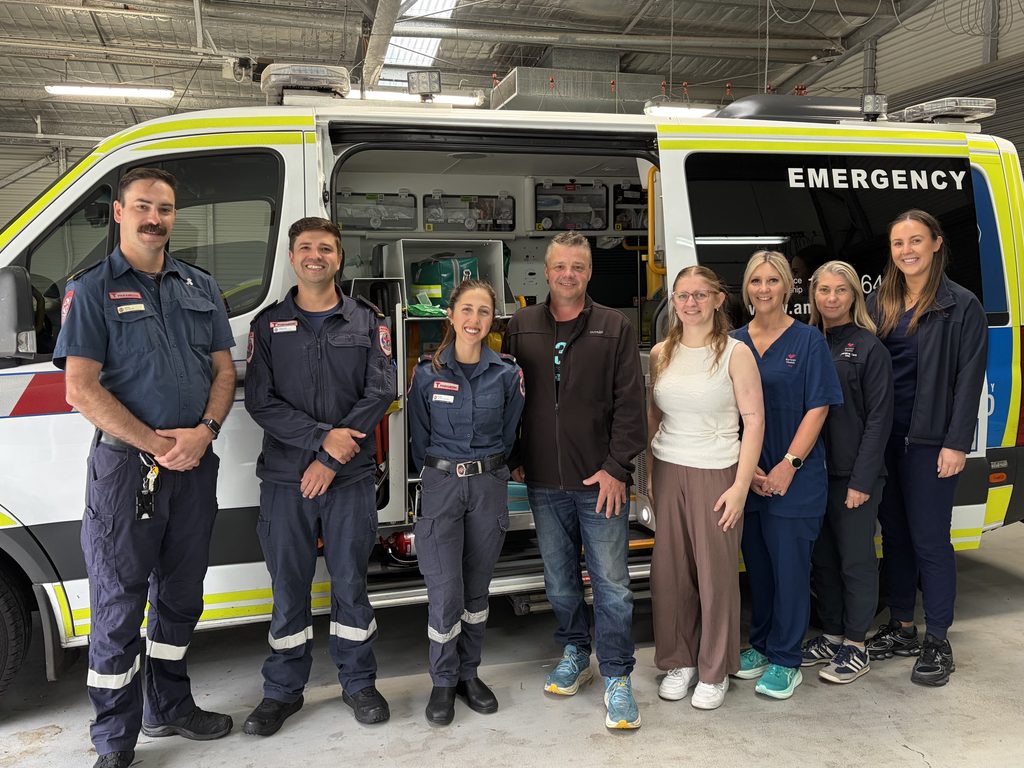
Steven spent a total of 53 days at University Hospital Geelong, including four weeks in an induced coma and time connected to an extracorporeal membrane oxygenation (ECMO) machine that took over the function of his heart and lungs.
University Hospital Geelong Intensive Care Unit Director Dr Claire Cattigan said the tertiary hospital is one of just two ECMO intermediate sites in Victoria.
“For patients in certain types of cardiac arrest, such as in Steven’s case, the ability to institute complex high-level organ support during resuscitation, in the form of ECMO, can restart the heart and save lives,” Dr Cattigan said.
Steven knows how lucky he is to have a second chance at life.
“It’s a miracle I’m here today. So many things went right for me. So many people were in the right place at the right time to help,” he said.
He and Jo are incredibly thankful to everyone who came to their house in their time of need.
“They did everything they could for him. They are all just beautiful people,” Jo said.
“I’d never done CPR before, but I knew whatever I did was going to be better than doing nothing.
“The outcome we have is because we got the help we needed so quickly. I want to thank everyone for their help and compassion.”
About GoodSAM
- GoodSAM alerts are sent to the nearest available responders (typically the closest three) who can accept or reject the alert based on their personal availability.
- When a GoodSAM responder accepts an alert, they are provided with the location of the patient and the nearest public AED so they can collect it on the way, if possible.
- GoodSAM alerts are monitored and always backed up by an ambulance response. The GoodSAM responder can start life-saving CPR and use an AED in the minutes between a Triple Zero (000) call and emergency services arriving.
- GoodSAM responders should always put their safety first. If you feel unsafe, reject or drop the alert, or wait for emergency services to arrive before entering the scene.
- To register, download the GoodSAM Responder app and sign up, or learn more about GoodSAM and Shocktober.