BY VICTORIA FIELDING for THE CONVERSATION
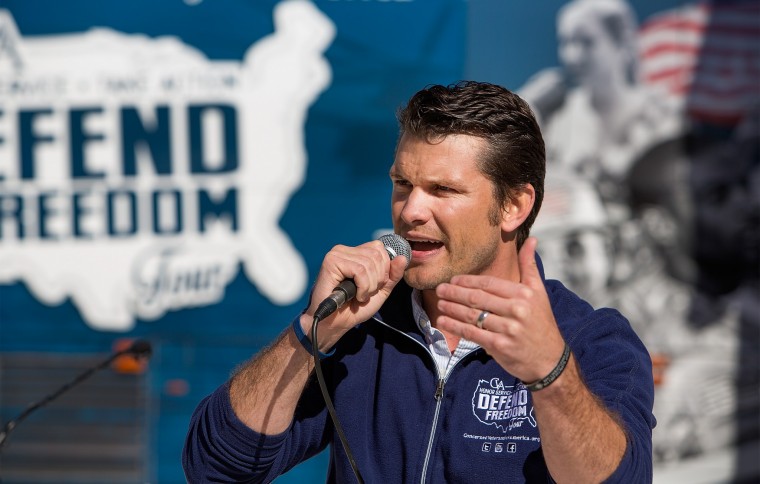
ADELAIDE, SA. — US Defence Secretary Pete Hegseth’s intention to broadcast the live execution of Fort Hood shooter Nidal Hasan has been met with global criticism and outrage. If it happens, this live broadcast would be the first US public execution since 1936, and the first execution by military firing squad since 1945.
My first thought on hearing about the broadcast was that I would never watch such a violent and potentially trauma-inducing spectacle. Yet, the question of individual choice raises a larger challenge for our society.
Can Australia prevent the footage of someone being killed by a firing squad from being accessed online?
Calls to block the livestream
The Greens have called on the government to block the livestream. They argue Australians don’t want this “incredibly shocking and barbaric” content available to adults and children because of the potential harm it will do.
In response to these calls, the eSafety Commissioner’s office has said it can’t “proactively prevent a livestream from occurring online”. However, it said online services would be responsible for protecting users from harmful material.
So what does this mean? According to our Online Safety Act, the government does have the legal power to block content depicting “abhorrent violent conduct”.
A major influence for establishing the act was the 2019 Christchurch massacre in Aotearoa New Zealand. The perpetrator live-streamed the violence, and video copies became available across the internet. Australia’s Online Safety Act was designed to give our government the power to protect the public from viewing such harmful and distressing material.
Although many would argue a firing squad execution is abhorrent violent conduct, the eSafety Commissioner’s regulatory guidance defines it as including violence such as terrorism, murder, torture, rape and kidnapping. This conduct is illegal by nature.
Although equally violent, however, an execution by firing squad is legal in the US. So it could potentially be a grey area as far as the act is concerned.
How would we even block it?
If the Australian government did decide the execution video falls under abhorrent violent conduct and should be blocked here, it may be challenging to do so.
The Australian government can’t stop or block the US government from live-streaming the execution, so the content will likely become available on the internet.
Under the Online Safety Act, the government can issue blocking notices to internet service providers, which require them to disable access to specific content. This power exists so the eSafety Commissioner can swiftly remove access to unexpected and harmful material, such as footage of a terrorist attack.
So far, so good. However, technical challenges remain. The main one is widespread use of virtual private networks. These legal services allow users to access content as if they were located outside Australia. At that point, viewing violent material the government had blocked would become an individual choice.
The eSafety Commissioner’s powers to force social media companies to remove content have also been tested, even when it’s clear that content meets the conditions of abhorrent violence. In 2024, social media company X successfully fought a ruling to remove graphic footage of a Sydney church stabbing from its platform, with X’s owner Elon Musk arguing on free speech grounds.

What about free speech, then?
The blocking powers in the Online Safety Act are not entirely unrestricted – public interest is a factor. For example, if violent content is used in a reasonable way in the context of news reporting, it’s exempt from the blocking requirements.
It’s possible proponents of free speech will argue that access to footage of a US firing-squad execution is a matter of public interest. This will be yet another consideration for the government and the eSafety Commissioner to weigh up.
Beyond their legal responsibilities, there’s also the matter of morality. Advocates for freedom of speech often treat this principle as absolute. Yet all freedoms come with responsibilities. When it comes to accessing abhorrent material on the internet, no matter where it comes from and for what purpose, the government must always consider its moral obligation to protect the public from harm.
All regulation works this way – from consumer protections, to road safety, to property rights, they all balance freedom with harm reduction.
As a society, we value freedom of speech, but we also accept there are limits on this freedom when it comes to harm. This is why there are already many guardrails and laws in place to protect us from harm in this sphere, whether they be related to defamation, cyber-abuse and bullying or, more recently, young people’s restrictions on access to social media.
Australia is not the only country currently grappling with the challenge of a public execution live-stream from the US. Governments in New Zealand, the Netherlands, Denmark, France and Spain are similarly weighing up their options.
When it comes to balancing freedoms against harms and technical logistics in the internet age, this case demonstrates that no country is an island when it comes to potentially harmful content online.
Dr Victoria Fielding is a Senior Lecturer in the School of Communication, Media and Journalism at Adelaide University. Victoria’s research is interested in the influence of media on democracy and media representation of political and cultural contestation.