


















DONALD, VIC. — With haymaking underway in the northwest and western parts of Victoria, the Country Fire Authority (CFA) is reminding landowners to be vigilant when it comes to baling hay.
Haystack fires are often caused by spontaneous combustion when hay is baled with excess moisture. High moisture levels, combined with the compact nature of hay bales, can create internal heat, leading to ignition.
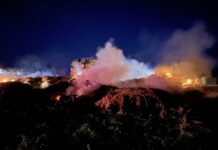
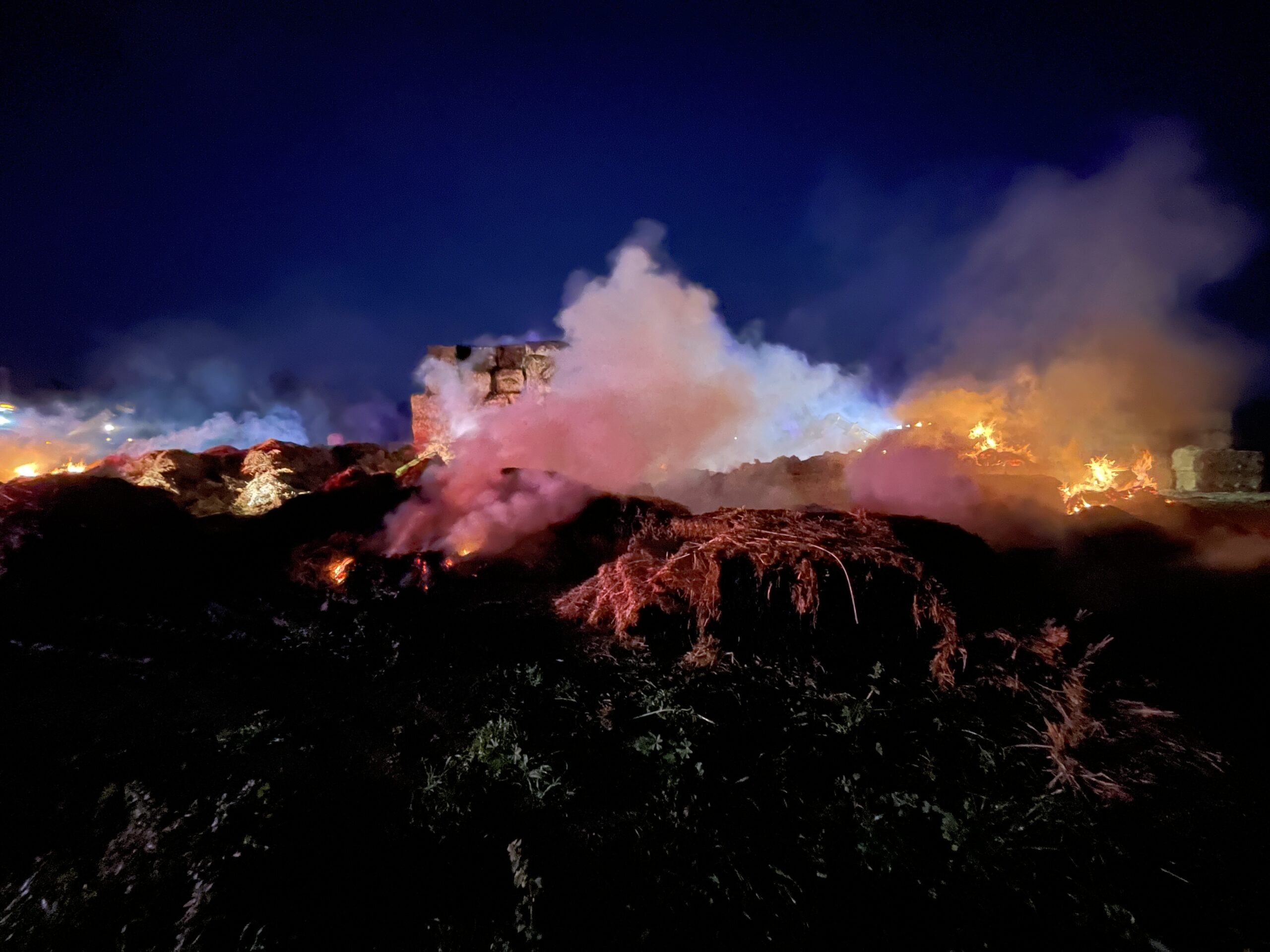
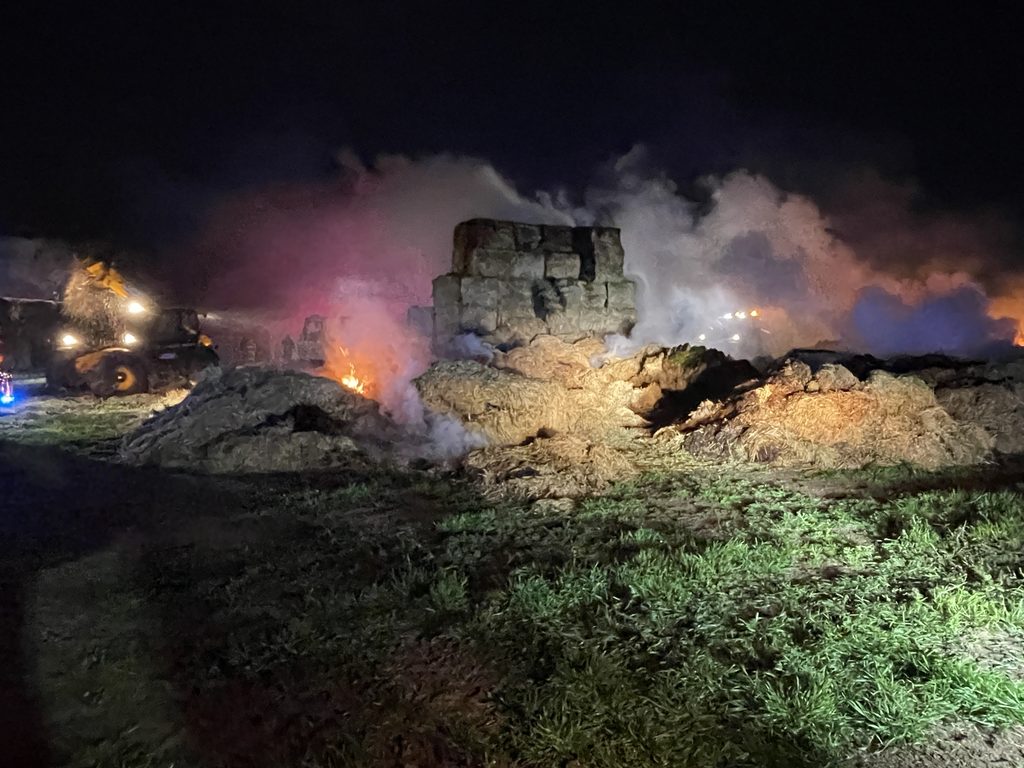
The warning follows an incident in Donald last month, where about 400 bales were lost in a haystack fire.
Five CFA units, including a bulk water carrier, were called to the fire at 5.35pm on September 3, crews worked swiftly to bring the incident under control in just over half an hour.
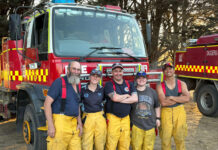
Donald Captain and Incident Controller Brod Harrison said the fire was initially largely contained within the bales.
“When we first arrived, there wasn’t a lot of fire. It was mostly smouldering inside the bales, but once we pulled them apart, they started to flare up,” Brod said.
“About half a dozen nearby farmers brought machinery to help separate the burning bales from the ones that could be saved.”
The incident was followed by a second significant haystack fire in Lockington on 12 September, which affected around 120 bales.
CFA District 18 Acting Assistant Chief Fire Officer Shane Bailey said there were a number of factors that could contribute to haystack fires.
“Hay that is baled with too much moisture can generate heat as it sits in a stack, and under the wrong conditions that heat can build to the point where a fire starts.
“It’s important that people storing hay understand the risks and regularly monitor their stacks, particularly in the weeks after baling.”
“Haystacks should be kept well-ventilated and, where possible, separated into smaller stacks rather than having a large amount of hay stored together,” Shane said.
“Keeping sheds, gutters and downpipes well maintained can also help prevent water from getting into stored hay.”
He said checking the temperature of stored hay was an important precaution.
“There are a range of ways people can monitor the temperature of hay, from traditional temperature probes through to newer technology that can provide remote readings and alerts.
“If a haystack is getting unusually hot, that can be a warning sign that something is happening inside the stack and it needs to be taken seriously.”
For more information, visit CFA’s website or contact your local CFA brigade for advice on haystack safety.