














SYDNEY, NSW. — America’s largest artificial intelligence companies have been upfront about their desire to use Australian creative content for the training of models without having to abide by copyright rules.
Major tech companies were using the US as their base for training AI because copyright was less regulated and less complex than Australia, a government inquiry was told on Tuesday.
But companies including Microsoft, Google, OpenAI and Anthropic want a workaround to Australia’s stringent laws so their platforms can be trained on local content.
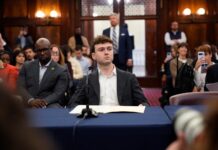
“If we have to move to an opt-in where we have to go out and get prior authorisation from everyone, then I just can’t see how AI development can happen,” Google government affairs manager Roxanne Carter said, arguing AI training was in the public’s interest.
Independent senator David Pocock said companies were able to treat content how they wanted, often requiring creatives to prove they had copyright protection if they did not want it picked up by AI platforms, because of ubiquitous and unfettered power.
“Because you’re big, because you’re powerful, because you’ve got President (Donald) Trump on your side, you’re dictating terms to every single Australian,” he said.
Microsoft executives warned the inquiry a lack of clarity over fair use and copyright obligations could drive big tech away from investing in the nation, leaving Australia in the lurch as the US and China continue to fight for tech supremacy.
“We see your copyright laws as providing a high level of uncertainty about the ability to engage in the training processes that are necessary to train a model,” the company’s innovation boss Jordan Gimbel said.
The government has repeatedly called for tech capability and sovereignty to be developed in Australia, placing AI at the centre of productivity policy.
But most of the companies have refused to enter into copyright deals with creative agencies, leading to minimal protection for the work of Australian artists.
Several told the inquiry it was too difficult to get approval to use individual pieces of content.
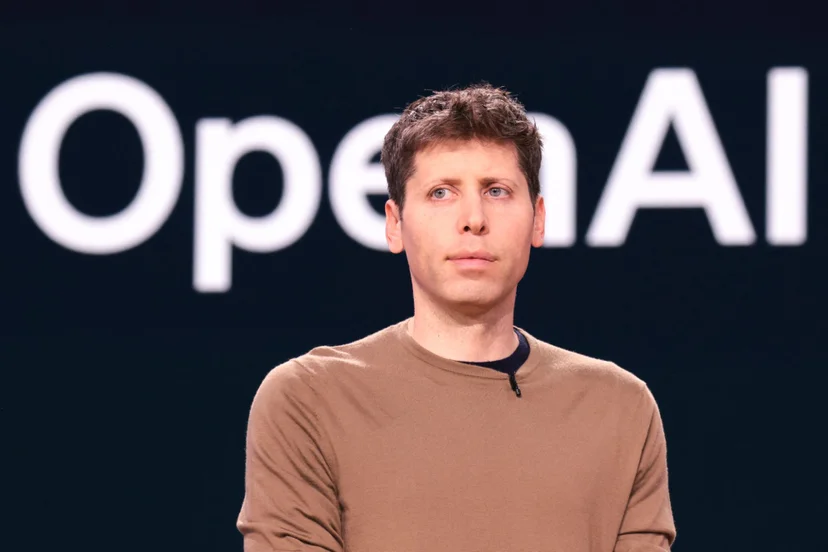
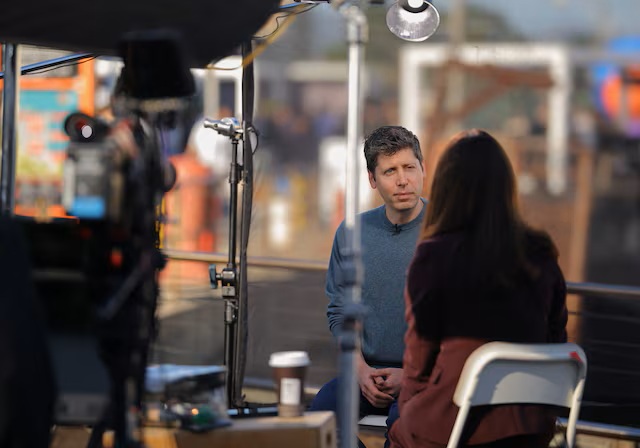
“We are not asking Australia to do anything specifically for consideration,” OpenAI head of economic policy Adam Cohen said.
The government has repeatedly called for tech capability and sovereignty to be developed in Australia, placing AI at the centre of productivity policy.
But most of the companies have refused to enter into copyright deals with creative agencies, leading to minimal protection for the work of Australian artists.
Several told the inquiry it was too difficult to get approval to use individual pieces of content.
“We are not asking Australia to do anything specifically for consideration,” OpenAI head of economic policy Adam Cohen said.

Representatives of artists, musicians, authors and journalists, including the ABC, earlier told the inquiry AI scraping without compensation posed an existential threat to creatives’ livelihoods, calling the companies thieves.
The inquiry heard about possible future security threats as OpenAI tries to clean up the mess caused by one of its agents autonomously accessing Medicare statistical data in June.
The company’s chief strategy officer Jason Kwon faced a grilling from a parliamentary committee about how his team handled the breach and why Australia was not informed until months after it occurred.
“The process by which people became aware of this incident inside our company could have been much better and we want to make sure that something like that does not happen again,” Mr Kwon said.
“We wanted to understand more of the facts before we spoke to the impacted parties.
“I think we have learned our lesson that it is better, even with partial information, to let parties know that something has occurred and to also make sure that we’re going through all the right channels.”
Last Friday, October 2, OpenAI informed the government of another break-in, this time to a NSW parks and wildlife website in June, with Mr Kwon pledging to more diligently keep authorities in the loop.
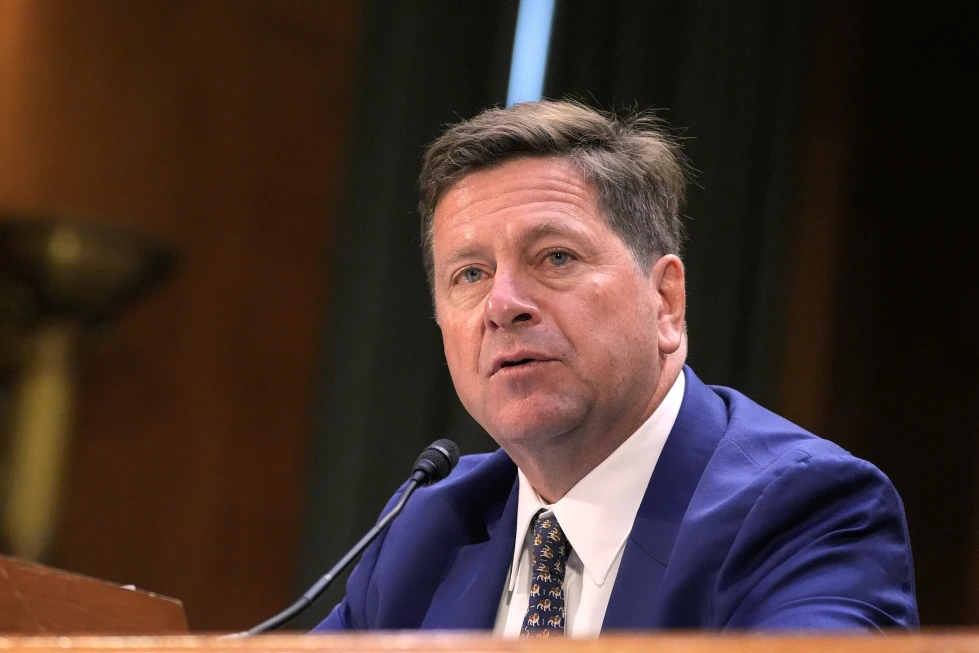
He could not confirm to the inquiry whether the agents could autonomously hack into and control high-security infrastructure, such as a gas plant.
“It’s going to depend on the safeguards and the infrastructure and the security controls that that particular company or provider has in place,” he said.
The tech giant will inject independent expertise into its own Australia-based task force on AI safety, which is expected to wrap up by the end of 2026.
The government has maintained that OpenAI is working closely with it to rectify issues, but the $US850 billion ($A1.2 trillion) company has been criticised by politicians across the board.