













CRANBOURNE, VIC. — When Cranbourne mum Belinda came down with a sudden, searing headache that wouldn’t ease, Ambulance Victoria paramedics identified a subtle symptom that would save her life from a stroke.
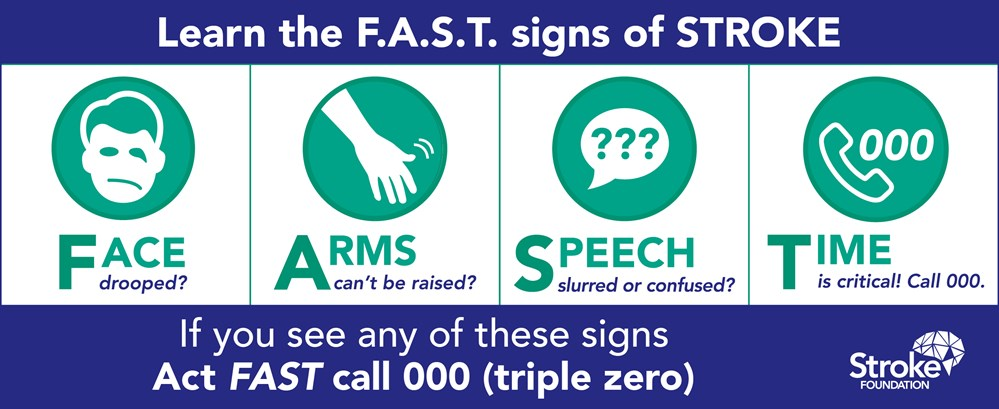
This National Stroke Week (August 3 to 9), Ambulance Victoria is encouraging Victorians to know all the signs of stroke, including those that don’t fall within the standard F.A.S.T. (Face, Arms, Speech, Time) symptoms.
In July 2024, Belinda Timmins, then 48, thought she was having a migraine when she suffered a haemorrhagic stroke, caused by a ruptured brain aneurysm.
“I was unaware at the time as to what was happening; I just knew I had an intense pain like a lightning bolt had hit the side of my head. It was the worst head pain I had ever had,” Belinda said.
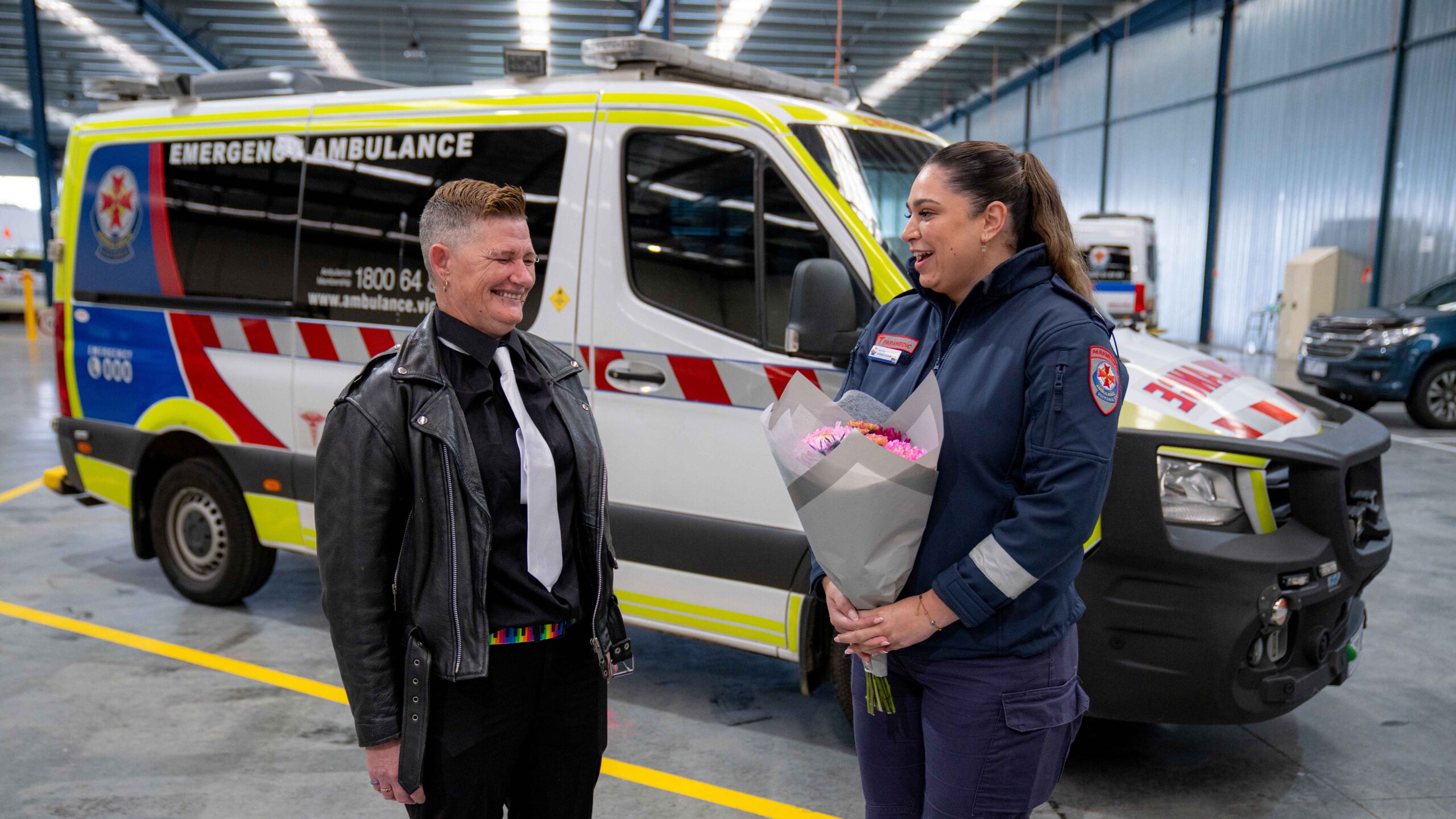
When the pain continued to worsen, Belinda’s son called Triple Zero (000) with Ambulance Victoria paramedics Hayley and John arriving at the scene within minutes.
Although Belinda’s initial stroke assessment did not raise any concerns, graduate paramedic Hayley noticed one subtle sign that the situation could be life-threatening.
“Belinda did not seem to have any neurological deficits, such as slurred speech or a facial droop, but she did have unequal pupil sizes and a severe headache despite strong pain relief,” Hayley said.
“The pupil symptom alone was enough for me to know she needed to be transported to a neurological hospital.”
Belinda was immediately transported to the Monash Medical Centre under lights and sirens, where her care was handed over to the specialist stroke team.

This was Hayley’s first haemorrhagic stroke case as a paramedic and one she said will stay with her.
“It’s important to be exposed to different types of cases as a graduate and especially ones with less obvious symptoms such as Belinda’s,” Hayley said.
“Each experience sharpens your skills and develops your knowledge which I can use going forward to help inform the care I provide others.
“It’s rewarding knowing we were able to use our skills to ensure Belinda received the emergency care she needed, which ultimately helped to keep her here with her children.”
Ambulance Victoria Director of Stroke Services Professor Chris Bladin urged the community to familiarise themselves with all signs of stroke, including those that fall outside the F.A.S.T. (Face, Arms, Speech, Time) symptoms.
“Belinda’s case highlights the critical role paramedics play in recognising stroke symptoms, even when they don’t present in typical ways,” he said.
“The most common non-F.A.S.T. symptoms can include loss of vision, double vision, sudden imbalance or vertigo (if there is no prior history), sudden loss of consciousness and isolated limb weakness.
“Our message to Victorians is that if you suspect someone is having a stroke, always call Triple Zero (000) for advice.”
Belinda said she will be forever grateful to her son for calling Triple Zero (000) and to Hayley and John for saving her life.

“As far as I am concerned, Hayley and John are the reason I am still here today,” she said.
“They stabilised me and got me to the Monash Medical Centre for the treatment which saved me and has kept me here with my three children.
“The brain aneurysm could have taken my life. I am eternally grateful for these wonderful paramedics.”