











PILBARA, WA. — The story goes that, on November 22, 1952, Lang Hancock – Gina Rinehart’s father – was piloting a light aircraft that was forced by bad weather to fly at a very low altitude over the Turner River gorges in Western Australia. Hancock noticed the large bands of deep ochre rock within the gorge and realised they might be iron ore.
The discovery led to the development of Western Australia’s major iron ore industry in the Pilbara region, and changed Australia from being an importer of iron ore to an exporter.
Following this discovery, Hancock initiated and perfected a technique which led to the further discovery in the Pilbara of more than 500 other deposits of iron ore, and which earned him the nickname of “The Flying Prospector”.
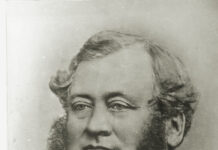
However, the veracity of this story has been questioned. There is evidence to suggest that a 25-year-old Englishman by the name of Harry Page Woodward, who had come to South Australia in 1883 to take up the post of assistant state geologist, was the one who discovered the Pilbara’s iron ore deposits.
Harry Woodward relocated to Western Australia as the new government geologist, and undertook extensive ground surveys of the state, mapping some 175,000 square kilometres of the state.
Mr Woodward recognised the iron-bearing potential of the northwest of the state, and recorded that “There is enough to supply the whole world should the present sources be worked out.”
The iron ore fields of the Pilbara were already mapped by Western Australia’s Mining Department in the 1920s.
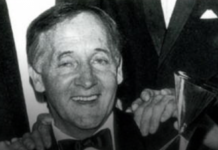
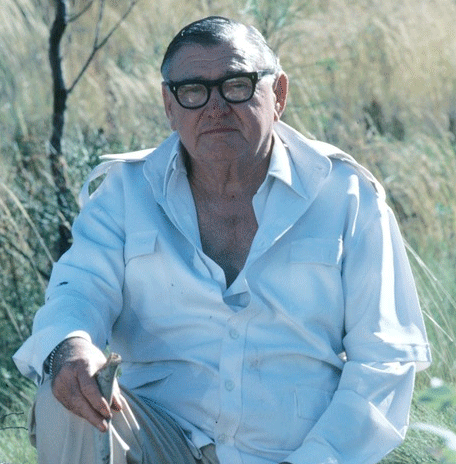
Langley George Hancock, or “Lang” Hancock, was born on June 10, 1909, in Perth, Western Australia. A member of one of Western Australia’s oldest landowning families, he became a politician and iron ore magnate.
Hancock is most remembered for his desire to poison First Nations people so he could mine the area without Native Title court cases.
In a 1984 television interview, Hancock suggested forcing unemployed indigenous Australians − specifically “the ones that are no good to themselves and who can’t accept things, the half-castes” − to collect their welfare cheques from a central location.
“And when they had gravitated there, I would dope the water up so that they were sterile and would breed themselves out in the future, and that would solve the problem,” Hancock said.