



















SYDNEY, NSW — Sydney’s Royal Botanic Gardens were established in 1816, although the title of ‘Royal’ was only granted in 1959. Set aside as Crown Land by Captain Arthur Phillip following the arrival of the First Fleet, the land where the Botanic Gardens sit was originally used as an initiation ground by the indigenous Cadigal people, who referred to the area as Woccanmagully.
After the First Fleet arrived in 1788, the land was cleared for farming, giving rise to the name Farm Cove.
Governor Arthur Phillip laid the foundation plate for Australia’s first Government House, and reserved Farm Cove as Crown land. By 1802, the gardens had begun to be planted with a collection of native and exotic plants.
In 1807, Governor William Bligh began the construction of a road system, which was completed under Governor Lachlan Macquarie’s tenure. On June 13, 1816, when the road was completed, traditionally marks the foundation of the Gardens.
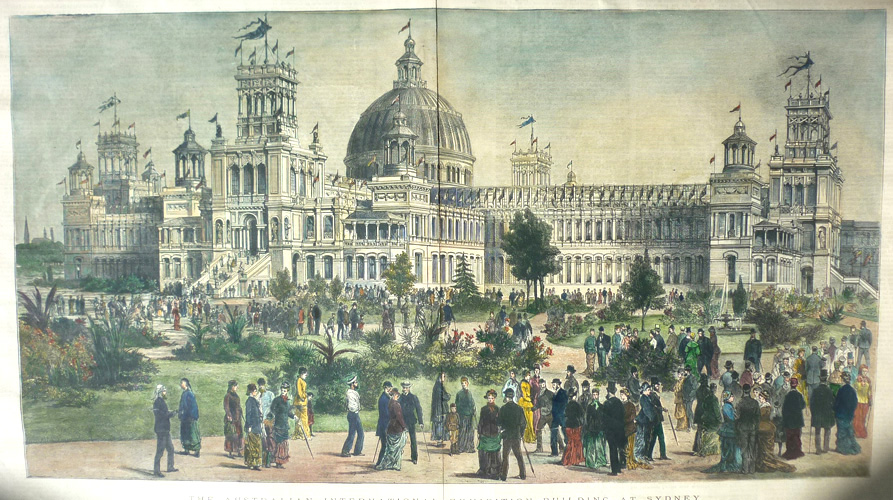
The Gardens underwent numerous changes and developments in ensuing decades, but the most significant was perhaps the construction of the Garden Palace Exhibition Building.
Purpose-built for Sydney to host its first international exhibition in 1879 and the first World’s Fair to be held in the southern hemisphere, the building was designed by Colonial Architect James Barnet and modelled on London’s Crystal Palace.
It featured four towers which were visible from almost any point in Sydney. The Garden Palace achieved what it was hoped it would do: it showcased the prosperity of Sydney to the world, and resulted in increased infrastructure for the city, such as a new tram network.
Garden Palace continued to be utilised extensively after the international event for further exhibitions, balls, lectures and concerts, while an art gallery and the first technological museum were also housed in the building. Various Government departments established offices, storing important documents in the basement.
On September 22, 1882, a fire started in the Government House shortly before 6am. Primarily made from timber rather than stone, the enormous building burnt to the ground.
Valuable documents and records were lost, including the 1881 census, land occupation records, railway surveys, Aboriginal artefacts, priceless artworks, the foundation collection of the Technological and Mining Museum and a new map of the colony which had taken years to complete.
The cause of the fire was never discovered, but arson was suspected.
What is even stranger is how quickly the memory of the Garden Palace was lost. Very few Australians, including Sydneysiders, are aware there was ever such a building in the Royal Botanic Gardens.
At the Macquarie Street entrance to the Royal Botanic Gardens stand the only visible legacy of that magnificent structure: the stone pillars of the gates which once opened to the Garden Palace Exhibition Building.