





















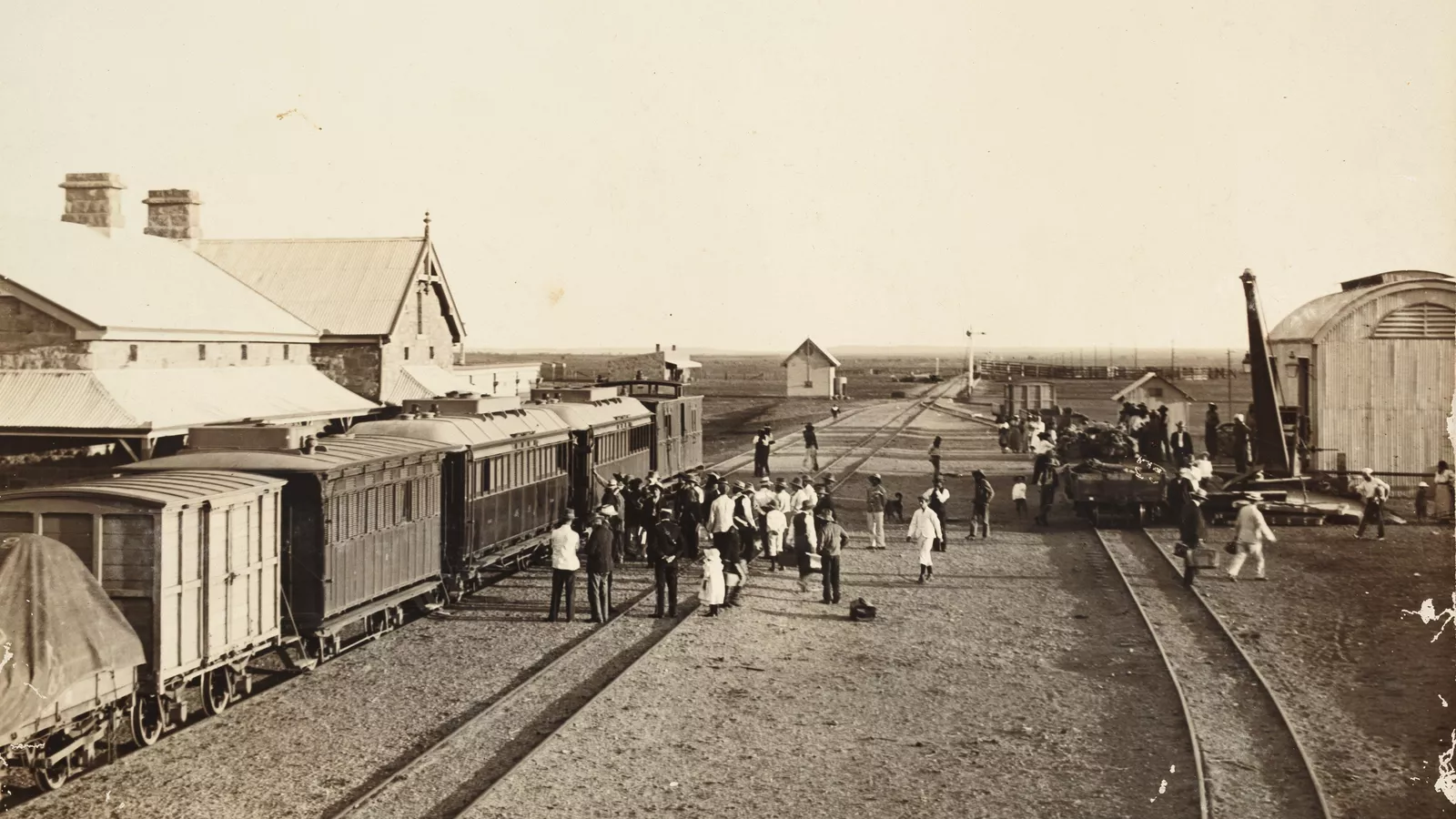
OODNADATTA, SA. — With the development of the railway, Oodnadatta became a busy town in South Australia’s far north, being a government service centre and supply depot for the surrounding pastoral properties. A post office was established in 1891, and an Anglican Sunday School a year later. A General store and Butcher also followed, among other businesses.
Until the railway was extended to Alice Springs in 1929, the town was largely supplied from Alice Springs by Afghan camel trains. Oodnadatta’s importance continued through to World War II, when the Australian Defence Forces established facilities to service troop trains and fighter aircraft en route to Darwin.
The first explorer to arrive in the region was John McDouall Stuart, who explored and mapped the area in 1859. The Overland Telegraph line followed in the wake of Stuart’s exploration.
Soon after, the railway line from Adelaide was also constructed, with its terminus at Warrina. Oodnadatta was surveyed on October 30, 1890, and on that day it was also declared a Government township.
Less than three months later, the railway line was opened from Warrina to Oodnadatta, and Oodnadatta became the terminus of the Great Northern Railway, later The Ghan.
With a 2006 population of just 277, it lies approximately 1,011 km from Adelaide. Close to the edge of the Simpson Desert, its name is derived from the Arrernte word “utnadata”, meaning “blossom of the mulga”.
In 1981, the railway line was moved to the west, and the town became a residential freehold town for indigenous Australians.