


















VICTORIA. — For more than 20 years, Victoria’s Emergency Medical Response (EMR) co-responder program has dispatched Ambulance Victoria paramedics and Fire Rescue Victoria firefighters simultaneously to cardiac arrest cases, allowing patients to receive critical care as quickly as possible.
When 16-year-old Alex Harbour went into cardiac arrest while working his shift at a local fast-food restaurant, EMR made all the difference.
Firefighters were first on the scene in the co-response partnership with Ambulance Victoria that’s saving lives, taking over CPR from bystanders and delivering one shock with a defibrillator, getting Alex’s pulse back just eight minutes after his heart had stopped.
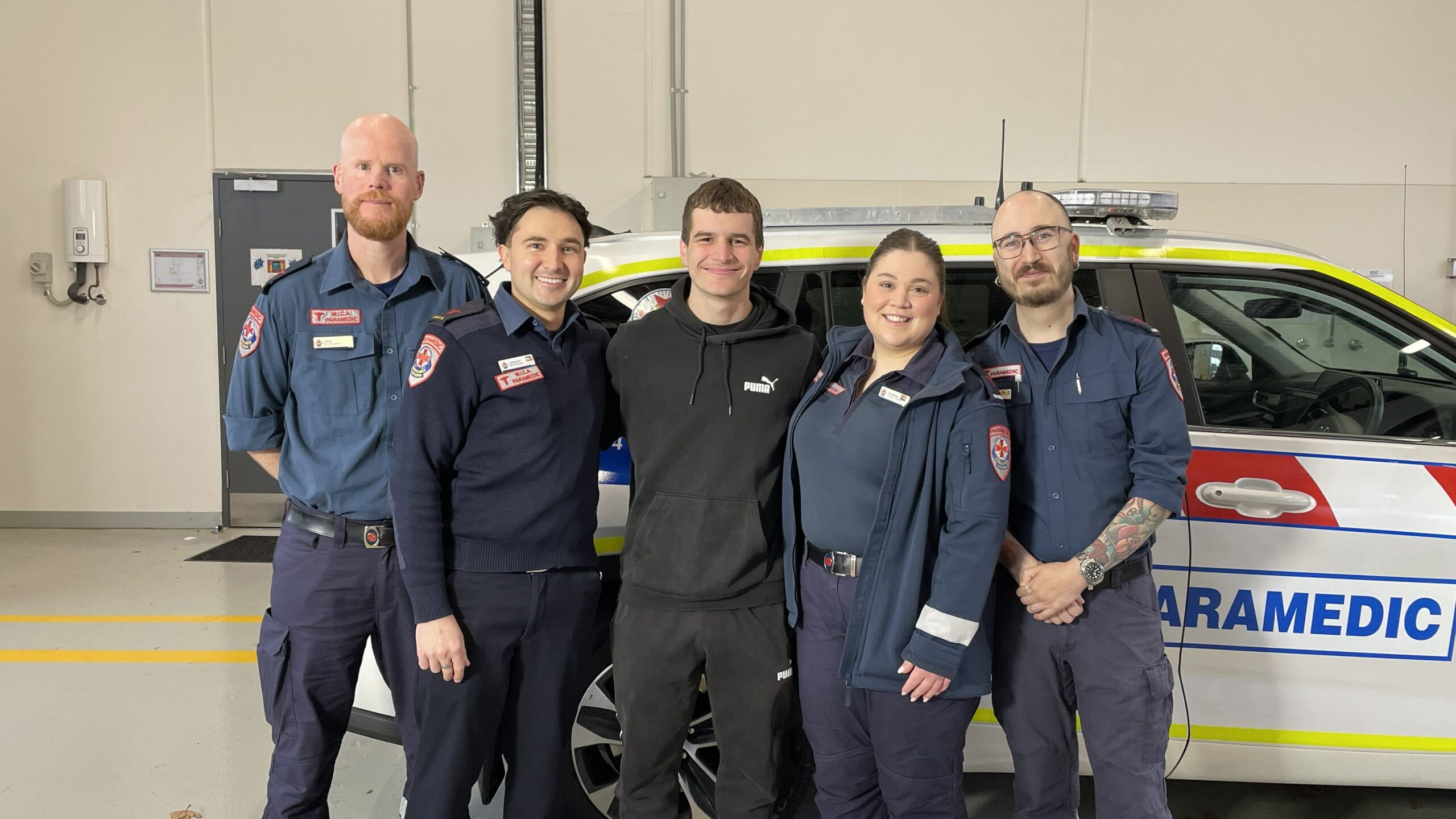
Ambulance Victoria Mobile Intensive Care Ambulance (MICA) paramedic Cameron Shillabeer said Alex’s survival is a testament to the life-saving impact of the EMR program.
“Every minute matters in a cardiac arrest and the sooner a patient receives CPR and a shock from a defibrillator, the better their chance of survival,” he said.
“The benefits of EMR are clear in cases such as Alex’s, where firefighters are able to get to a patient and begin life-saving care.
“The firefighters, along with Alex’s work colleagues who recognised the cardiac arrest and began CPR, saved Alex’s life.
“We are proud to work alongside our emergency services colleagues to help save more lives, such as Alex’s.”
A cardiac arrest occurs when a person’s heart suddenly stops pumping blood effectively around the body, and can happen to anyone at any age, health or fitness level, often without symptoms.
Ambulance Victoria research shows 35 per cent of cardiac arrest patients who receive their first defibrillation from emergency medical services (including paramedics or firefighters) survive.
That number is boosted even further when cardiac arrest patients receive a shock from a public automated external defibrillator (AED), with 63 per cent surviving to hospital discharge.
When Alex suddenly collapsed and became unresponsive in February, his colleagues knew something was seriously wrong. They called Triple Zero (000) and began CPR.
Fire Rescue Victoria Acting Commander Emergency Medical Services Andrew MacIntosh said that firefighters were on the scene within four minutes.
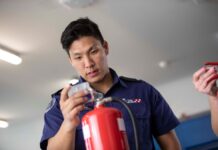
“Our crews are highly trained to administer advanced CPR, supply oxygen and first aid, use defibrillators and respond to many other life-threatening medical scenarios,” said A/Commander MacIntosh.
“When firefighters are co‑responded with Ambulance Victoria, they can provide critical life‑saving care until paramedics arrive. Once Ambulance Victoria is on scene, firefighters remain to support and assist as required.
“In this incident, our firefighters immediately began treating Alex and delivered a shock using a defibrillator. They continued CPR and worked alongside Ambulance Victoria upon their arrival. Thankfully, Alex began showing signs of improvement.”
Ambulance Victoria crews arrived to find Alex with a pulse but still unconscious. MICA paramedics intubated him at the scene – a highly skilled pre-hospital procedure which put Alex into a medically-induced coma so paramedics could manage and support his airway on the way to hospital.
Alex survived and four months on, has returned to normal life, going back to school and work.
“I can’t thank everyone enough for everything they did for me. I’m feeling really good and loving getting back to normality and seeing my friends again,” he said.
“We never knew firefighters carried a defibrillator with them. I’m so grateful they came so quickly and were able to start my heart beating again.
“To the firefighters and paramedics, my boss and my work colleagues – you are all incredible people for saving my life. It takes someone special to save other people’s lives, and you all are.”
His mother, Liz, said it was hard to put into words how thankful she is to everyone who played a part in saving her son’s life.
“Thank you for everything – if it weren’t for his boss who began CPR, the firefighters who were there so quickly to help, and the paramedics, it could have been a completely different outcome,” she said.
“What happened to Alex is a reminder of how important it is for everyone to know how to give CPR.”
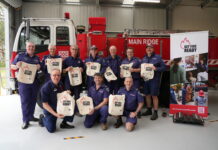
The EMR program began in 2001 with fire stations in Metropolitan Melbourne. Now, it has expanded statewide, with Country Fire Authority (CFA) volunteer brigades also co-responding to life-threatening medical emergencies as part of the Fire Medical Response (FMR) program with Ambulance Victoria.