














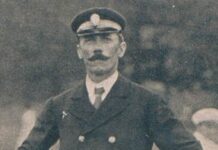





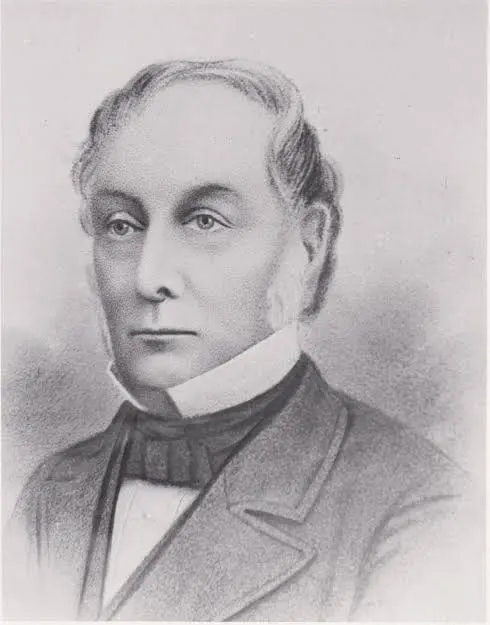
NEW SOUTH WALES. — Hamilton Hume, born near Parramatta, New South Wales on June 19, 1797, was an Australian-born settler with excellent bush skills. Hume was 15 when his family moved to a grant of 100 acres at Appin.
His first exploration was at age 17 when, with his younger brother John and an Aboriginal man, he explored as far as the Berrima – Bong Bong district. Over the next two years, Hume continued his explorations beyond this area to the Bungonia district.
During this time, he learnt skills of negotiating with the indigenous people, and his explorations were never marred by the hostilities which beset later explorers.
In 1818, Governor Macquarie sent Hume, James Meehan and Charles Throsby through the same countryside, hoping to find an overland route south from Sydney to Jervis Bay. The party did not remain together, with Hume and Meehan continuing on to reach Lake Bathurst and the Goulburn Plains.
The following year, Hume and Meehan were allowed to accompany explorer John Oxley to Jervis Bay. Several other expeditions followed, during which Hume discovered the Yass Plains and the Clyde River, and for which he was rewarded with a land grant of 300 acres at Appin.
Hume is perhaps best known for his 1824 exploration with William Hovell south of Sydney to Port Phillip. Although the two men argued for most of their journey, and even for many years after their return, this expedition was successful in many ways.
Hume and Hovell became the first to discover the “Hume River”, though it was later renamed by Sturt as the Murray River. They were the first known Europeans to see the Australian Alps and their journey revealed extensive grazing and pastureland further south.
Hume continued to make a name for himself by exploring beyond the Sydney area. In 1828, Governor Darling sent Hume to accompany Charles Sturt on an expedition to the interior of Australia, following the course of the Macquarie River.
The men reached the Bogan and Darling Rivers, during which Hume’s skills in negotiating with the Aboriginal people proved to be particularly valuable. Sturt requested Hume’s company on his expedition down the Murrumbidgee River which led to the discovery of the lower reaches of the Murray River; however, Hume had developed health issues and was unable to take part.
Hume continued to live a distinguished life as a farmer and grazier. In 1860, he was elected a fellow of the Royal Geographical Society. He died in 1873 and is buried in Yass Cemetery.