Air Ambulance Victoria diverts to NSW in life‑saving mission
WAGGA WAGGA, NSW. — Despite electrical storms preventing Air Ambulance Victoria from flying a time-critical cardiac arrest patient to Melbourne, the quick-thinking crew saved the life of a Tangambalanga local when the decision was made to fly north into New South Wales for the urgent care he needed.
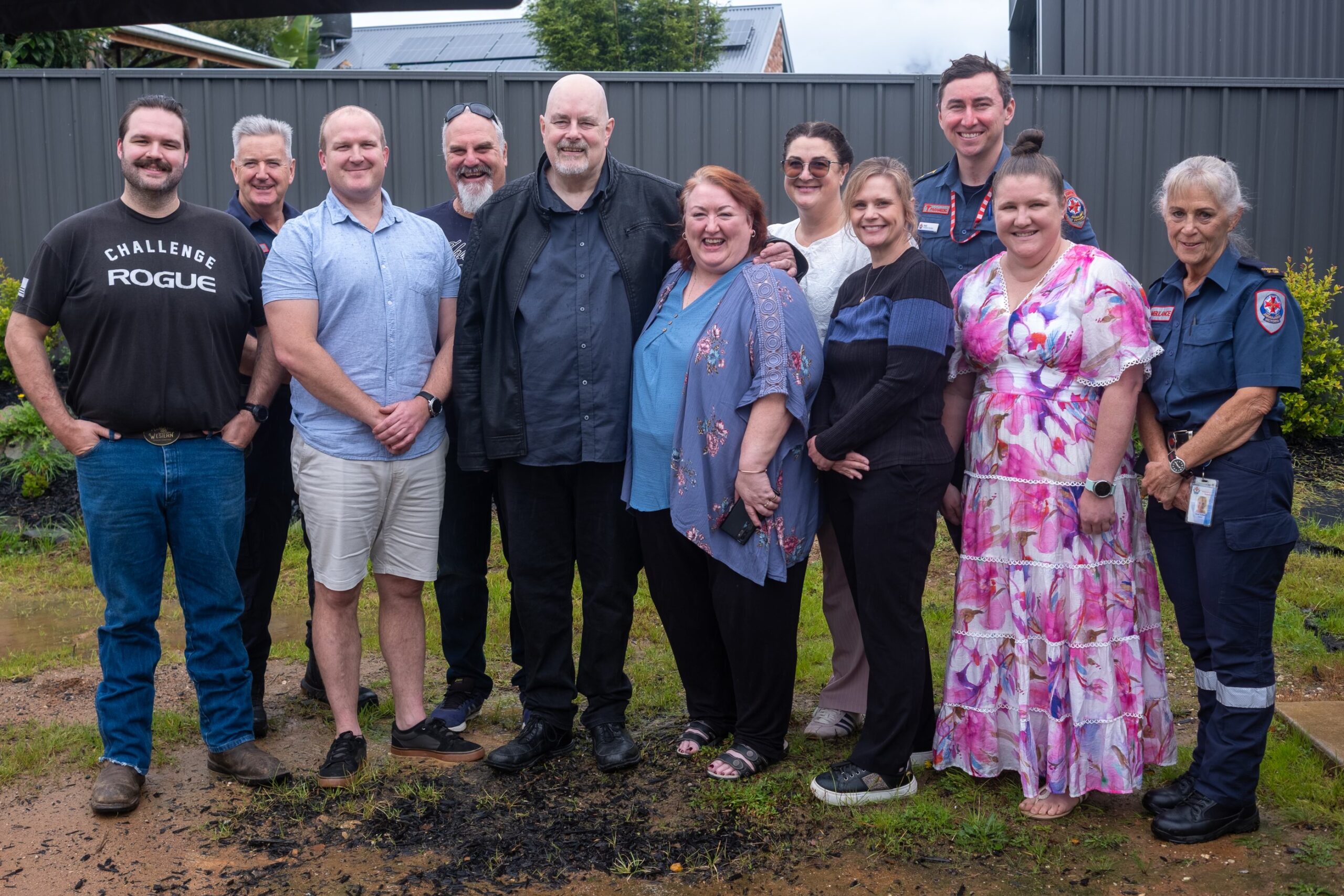
Colin with the paramedics, GoodSAM responders and bystanders who saved his life. PHOTO: AV/Supplied.
WAGGA WAGGA, NSW. — Despite electrical storms preventing Air Ambulance Victoria from flying a time-critical cardiac arrest patient to Melbourne, the quick-thinking crew saved the life of a Tangambalanga local when the decision was made to fly north into New South Wales for the urgent care he needed.
The Air Ambulance Victoria crew worked with Ambulance Victoria Flight Coordinators and New South Wales Health to ensure Wagga Wagga Base Hospital was ready to receive 63-year-old Colin Craig, whose life was hanging in the balance after going into cardiac arrest in his Tangambalanga home in February.
It was only the second time in 10 years that Air Ambulance Victoria had transported a Victorian patient by Helicopter Emergency Medical Service (HEMS) to the Wagga Wagga Health Service for emergency care.
Advertisement
Colin had been relaxing after dinner with his wife, Ria, when he suddenly became unresponsive.
“His body did a funny jerk and he did not respond,” Ria said. “My phone wasn’t working properly, so I called out to our neighbour Kristine, who is a nurse. She came across immediately with her partner, Brett, who is with the CFA, as well as our other neighbours, Claire and Jayden, who are a nurse and an army medic. Very handy people to have nearby in a medical emergency!
“They realised Colin was seriously unwell, called Triple Zero (000) and started performing CPR on him.”
Callum Harrison, a Tangambalanga local and GoodSAM Responder, received and accepted the GoodSAM alert on his phone and was directed to collect the closest automated external defibrillator (AED) from the local Lions Club before heading to Ria and Colin’s house.
GoodSAM is a free mobile app that connects patients in cardiac arrest with a nearby volunteer who is willing to begin hands-only CPR while paramedics are on their way.
Upon Callum’s arrival, high-quality CPR was underway in rotation by Jayden, Claire, Kristine and another GoodSAM Responder, Lisa. Callum quickly introduced himself and applied the AED to Colin’s chest, delivering six life-saving shocks.
When Ambulance Victoria paramedics arrived shortly thereafter, they were pleased to see the chain of survival in place.
A team of Advanced Life Support (ALS), Mobile Intensive Care Ambulance (MICA) and specialist Air Ambulance Victoria paramedics responded to Colin’s case, highlighting the severity of his situation.
Ambulance Victoria Paramedic Educator Patrick Gleeson said the stars aligned for a fantastic outcome for Colin.
“Due to the high-quality CPR that was performed by Callum, Jayden, Claire, Kristine and Lisa, alongside the six shocks delivered with the AED, we were able to work together and achieve ROSC (Return of Spontaneous Circulation) which meant that Colin’s heart was beating on its own once again,” he said.
“Colin essentially received world-class, intensive care level treatment on his living room floor in Tangambalanga – it was quite extraordinary.”
Paramedics performed an Electrocardiogram (ECG), ventilated Colin, monitored his heart rhythm, administered pain relief and sedated him before transporting him by road ambulance to Albury Airfield to rendezvous with the HEMS flight crew.
MICA Flight Paramedic Nick Roder met the road crew at Albury Airfield and took over Colin’s emergency medical care.
“Our ALS and MICA paramedics did an excellent job delivering world-class emergency care to Colin, and by the time he was with us, his presentation had improved a lot,” he said. “Their post-cardiac arrest management saved Colin from living with permanent brain damage.
“To add to the complexity of this case, we were unable to transport Colin to Melbourne due to electrical storms at the time, so we worked with our excellent Flight Coordinators and New South Wales Health to fly Colin to Wagga Wagga Base Hospital, something Ambulance Victoria has only done once before.
“When we landed, we received a heartwarming welcome from the Wagga Wagga Base Hospital cardiology team.” Nick reflected. “Colin’s case highlights how quick[l]y healthcare teams work together to adapt.”
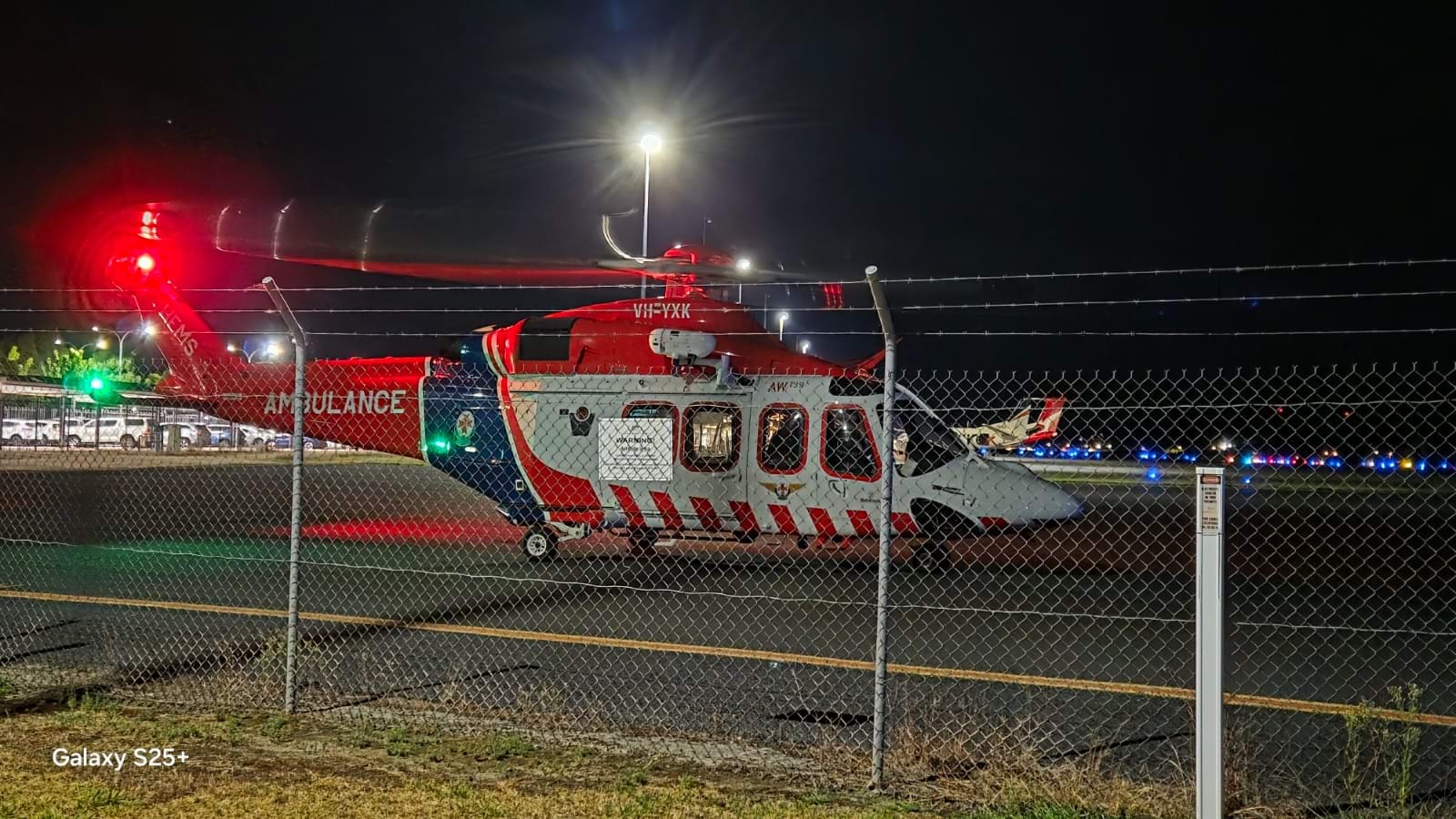
HeliMed 2, aviation registration VH-YXK, an AgustaWestland AW139 Rotary WingAir Ambulance Victoria helicopter. PHOTO: AV/Supplied.
Cardiac arrest survival rates are significantly boosted by the swift action of bystanders who use publicly accessible AEDs. The latest Ambulance Victoria data shows that when first shocked by a public AED, an incredible 63 per cent of cardiac arrest patients survive.
“Cardiac arrest can happen to anyone, anytime, anywhere, at any age, health or fitness level, and often without symptoms,” Patrick added.
“We encourage everyone to learn or refresh their CPR skills and how to use a defibrillator. You could help to save the life of a loved one.
“The combined efforts of our Ambulance Victoria crews, healthcare partners, GoodSAM responders, and Colin’s neighbours working together gave Colin the best possible chance of survival.”
Victoria has the best cardiac survival rates in Australia and the second best anywhere in the world, thanks to a high level of bystander intervention and early access to CPR and defibrillation.
Every day, around 21 Victorians suffer a cardiac arrest, and only one in 10 survive. For every minute CPR is delayed, survival decreases by 10 per cent.
In 2024-25, Ambulance Victoria paramedics responded to 7,550 cardiac arrest cases.
“We urge the community to refresh their knowledge about CPR and how to use a defibrillator. For every minute CPR is delayed, survival decreases by 10 per cent.”
Cardiac arrest survival rates are significantly boosted by the swift action of bystanders who use publicly accessible AEDs. The latest AV data shows that when first shocked by a public AED, an incredible 63 per cent of cardiac arrest patients survive.
There are more than 18,600 GoodSAM Responders in Victoria and we always need more. For more information, visit: ambulance.vic.gov.au/goodsam.
Last year, paramedics responded to 7,550 cardiac arrest cases in Victoria and most occurred at home. Victoria has the best cardiac survival rates in Australia and the second-best anywhere in the world.
Every day, around 21 Victorians suffer this kind of medical emergency, but only one in 10 survives it.